Overview
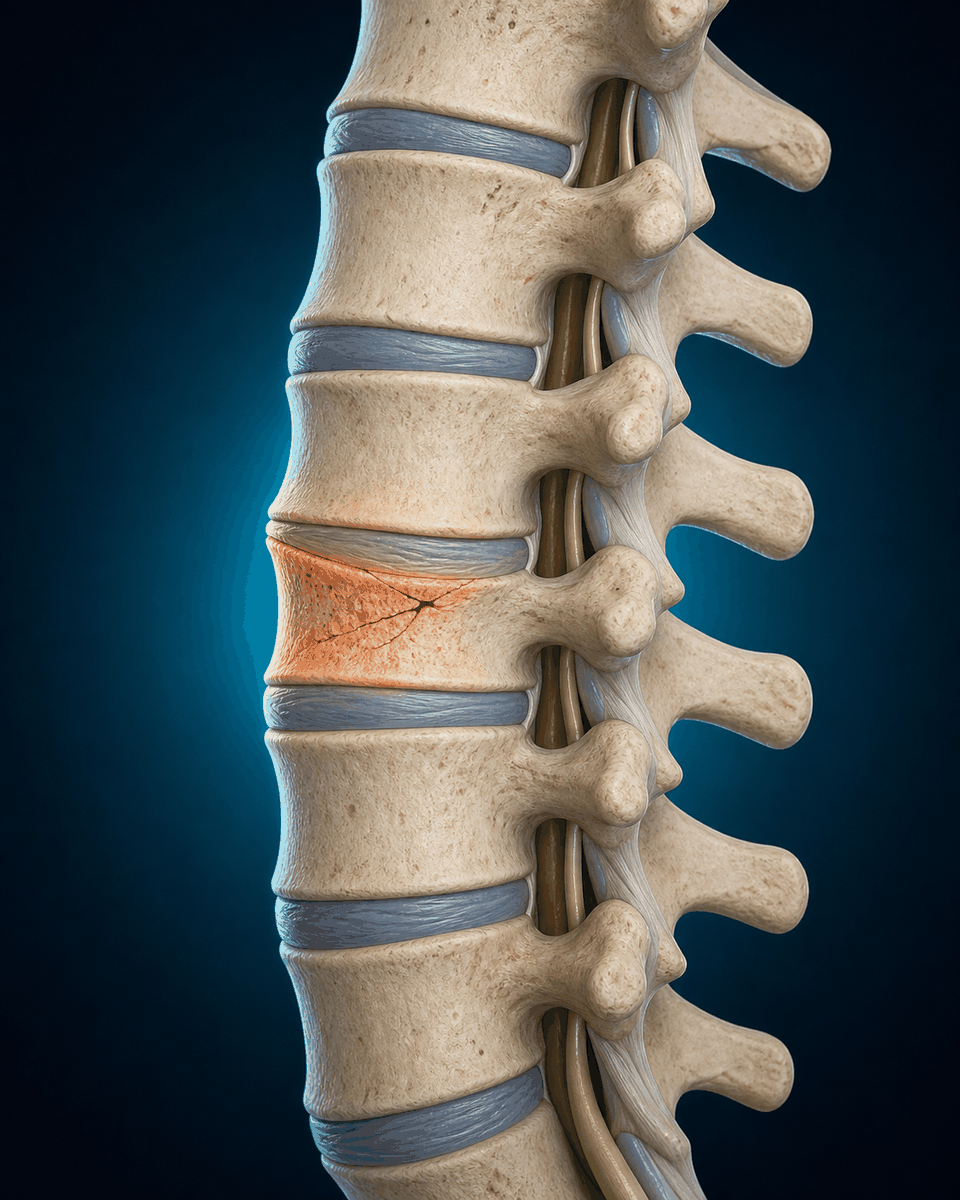
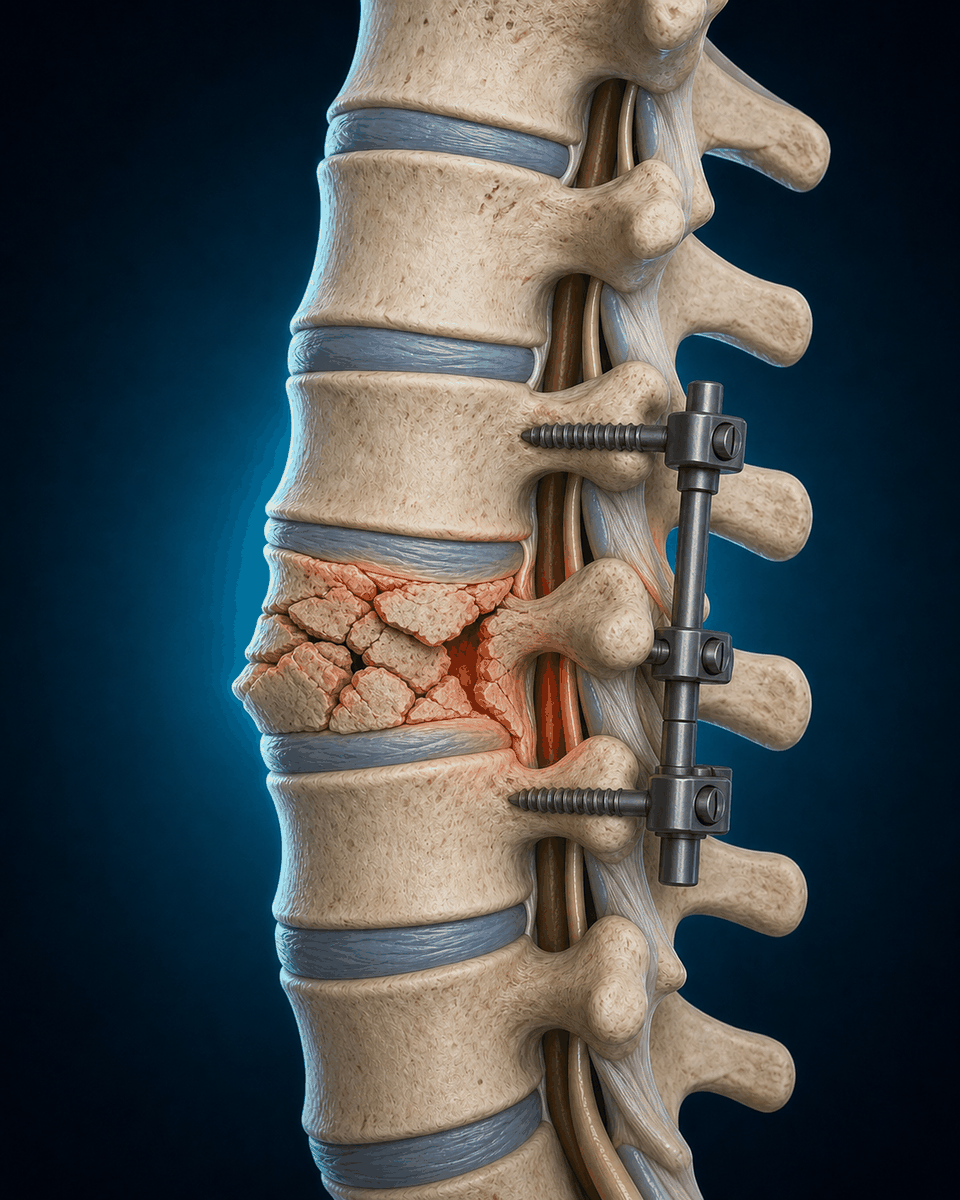
A traumatic spine injury can happen in an instant — a fall, a car accident, a hard hit during sports — and the range of resulting injuries is wide. Some fractures are stable and heal with time and bracing. Others are unstable or put pressure on the spinal cord or nerve roots, and those need surgical stabilization to protect neurologic function and allow the spine to heal in proper alignment.
Dr. Gerlach evaluates spine trauma across the cervical, thoracic, and lumbar spine, using imaging to determine whether a fracture is stable and whether the spinal cord or nerves are at risk. That assessment — not the mechanism of injury alone — determines whether bracing or surgery is the right path.
Symptoms
Symptoms of a spinal injury depend on the location and severity of the fracture, and can include:
- Severe, focal pain at the site of injury following a fall, accident, or forceful impact
- Pain that worsens with any movement, sitting up, or bearing weight
- Numbness or weakness below the level of injury — this is an urgent symptom that warrants immediate medical evaluation, as it can signal pressure on the spinal cord or nerves. After a significant accident or fall, a suspected spinal injury warrants calling 911 or going to the emergency room rather than waiting for a clinic appointment.
- In patients with osteoporosis, a compression fracture may present more subtly — as sudden loss of height or a new forward curve (kyphosis) rather than a distinct injury event
Treatment Options
Bracing and monitored healing. Many spinal fractures are stable and do not put the spinal cord or nerves at risk. These are typically managed with a brace and a period of activity modification, with follow-up imaging to confirm the fracture is healing in good alignment.
Surgical stabilization. When a fracture is unstable, badly displaced, or associated with neurologic symptoms, surgery may be needed to stabilize the spine, realign the affected segment, and relieve pressure on the spinal cord or nerve roots.
Osteoporosis evaluation. For patients with a compression fracture related to weakened bone, addressing bone health is an important part of care — both to support healing and to help prevent the next fracture.
Frequently Asked Questions
Do all spinal fractures need surgery?
No. Many spinal fractures are stable and can be managed without surgery — typically with bracing, activity modification, and monitored healing. Surgery is reserved for fractures that are unstable or that involve pressure on the spinal cord or nerves.
How long does healing take?
Healing time varies with the type and location of the fracture, but many stable fractures heal over roughly 8 to 12 weeks. Your timeline is individualized based on the injury, your bone health, and how healing progresses on follow-up imaging.
What about osteoporotic compression fractures?
Most osteoporotic compression fractures are managed non-operatively. Because weakened bone was a factor in the fracture, a bone health workup is an important part of care — both for healing and for reducing the risk of future fractures.